
Console tour
The console is a single-page app served by cored on the admin port (https://<host>:9443/). It talks to the Admin API; everything you can click, you can also script.
Sign in
One admin account. The initial password is printed once in the cored log (initial admin); the first login forces a change. Tokens are JWTs valid for 24 hours. Change the password any time under the account menu or POST /api/v1/auth/password.
Pages
| Page | What you do there | Backed by |
|---|---|---|
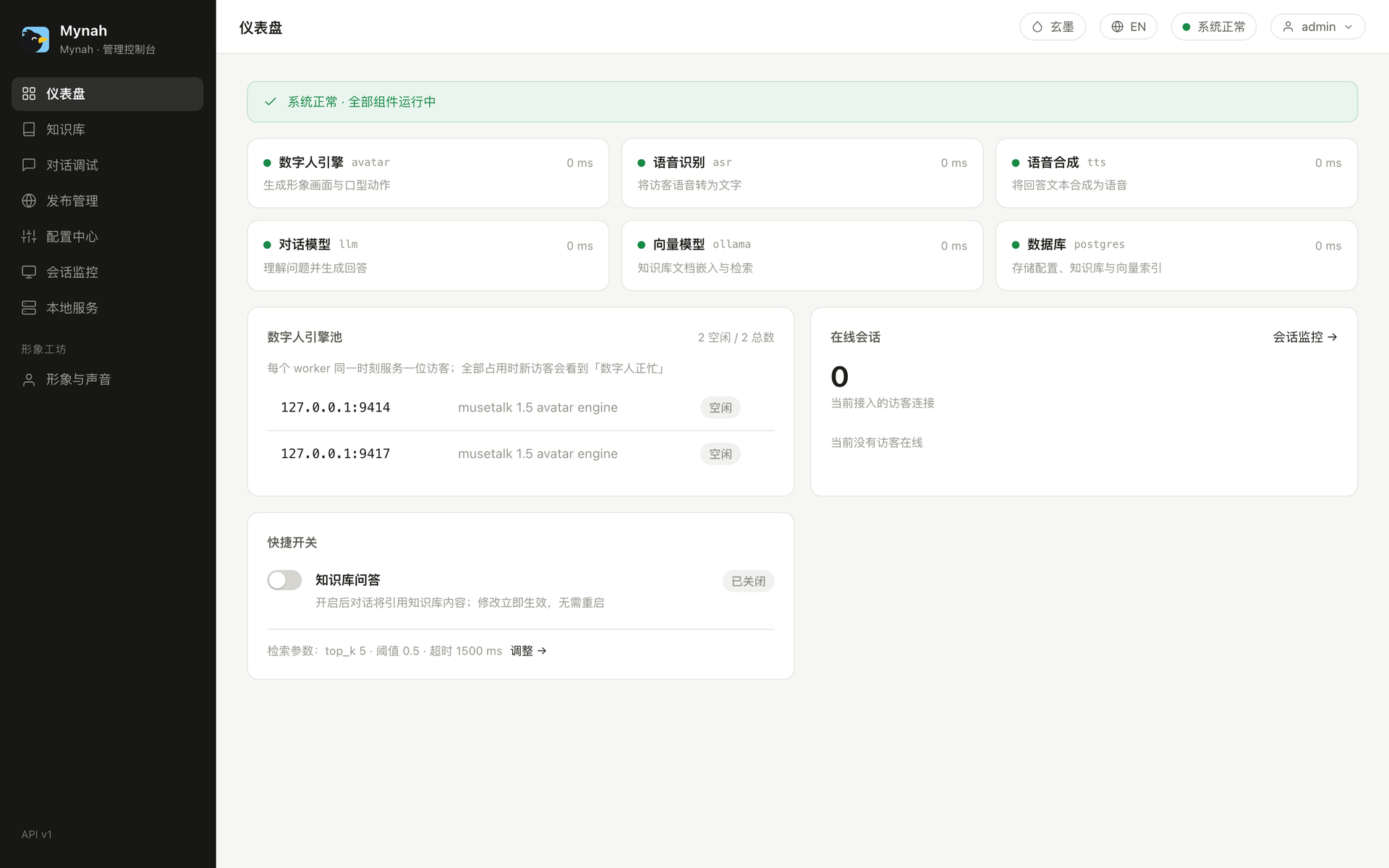
| 仪表盘 Dashboard | One glance at component health: avatar engine, ASR, TTS, LLM, embeddings, Postgres. | GET /api/v1/health |
| 配置中心 Config | Conversation model (any OpenAI-compatible endpoint, with a "test connection" that runs a real turn), system prompt, streaming, TTS base URL and voice, conversation brain (local pipeline or Qwen realtime cloud), turn-taking knobs, RAG parameters. Changes apply hot. | GET/PUT /api/v1/config/{group} |
| 形象与声音 Avatars & voices | Pick the current avatar, upload a talking video to bake a new one, preload avatars so visitors never see a cold start, pick and audition voices, clone a voice from reference audio when the TTS tier supports it. | /api/v1/avatars*, /api/v1/tts/voices |
| 知识库 Knowledge base | Create knowledge bases, upload documents, watch ingestion, run retrieval tests against live settings. | /api/v1/kb*, /api/v1/documents* |
| 发布管理 Publish | Freeze the current configuration into a channel: a shareable link with access control, concurrency cap and branding. Republish, rotate tokens, enable and disable. | /api/v1/channels* |
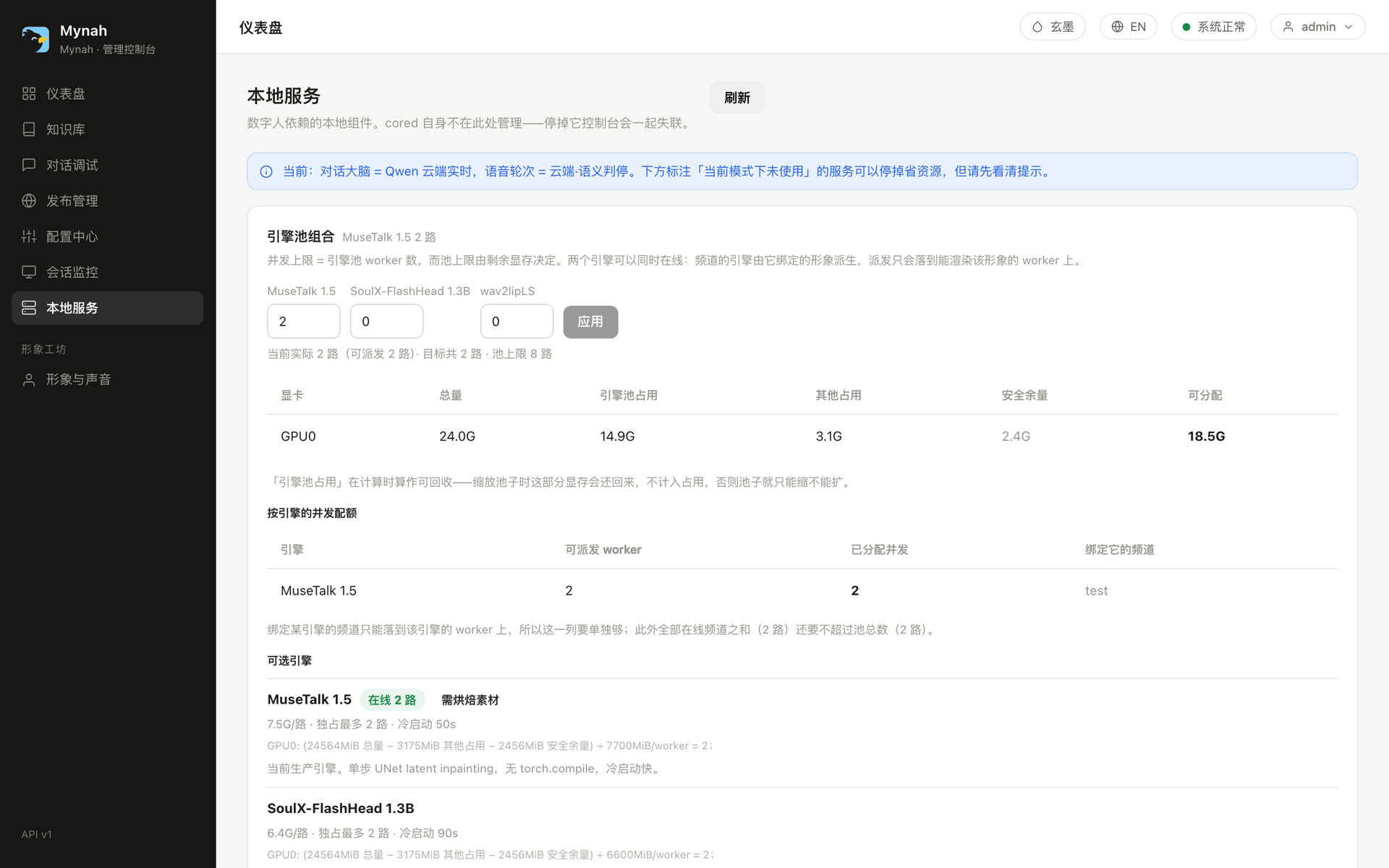
| 本地服务 Services | Engine pool: which engines run on which GPU, VRAM budget and what is still allocatable, start / stop / restart workers, per-engine concurrency quota and which channels are bound to it. | /api/v1/services*, /api/v1/avatar/* |
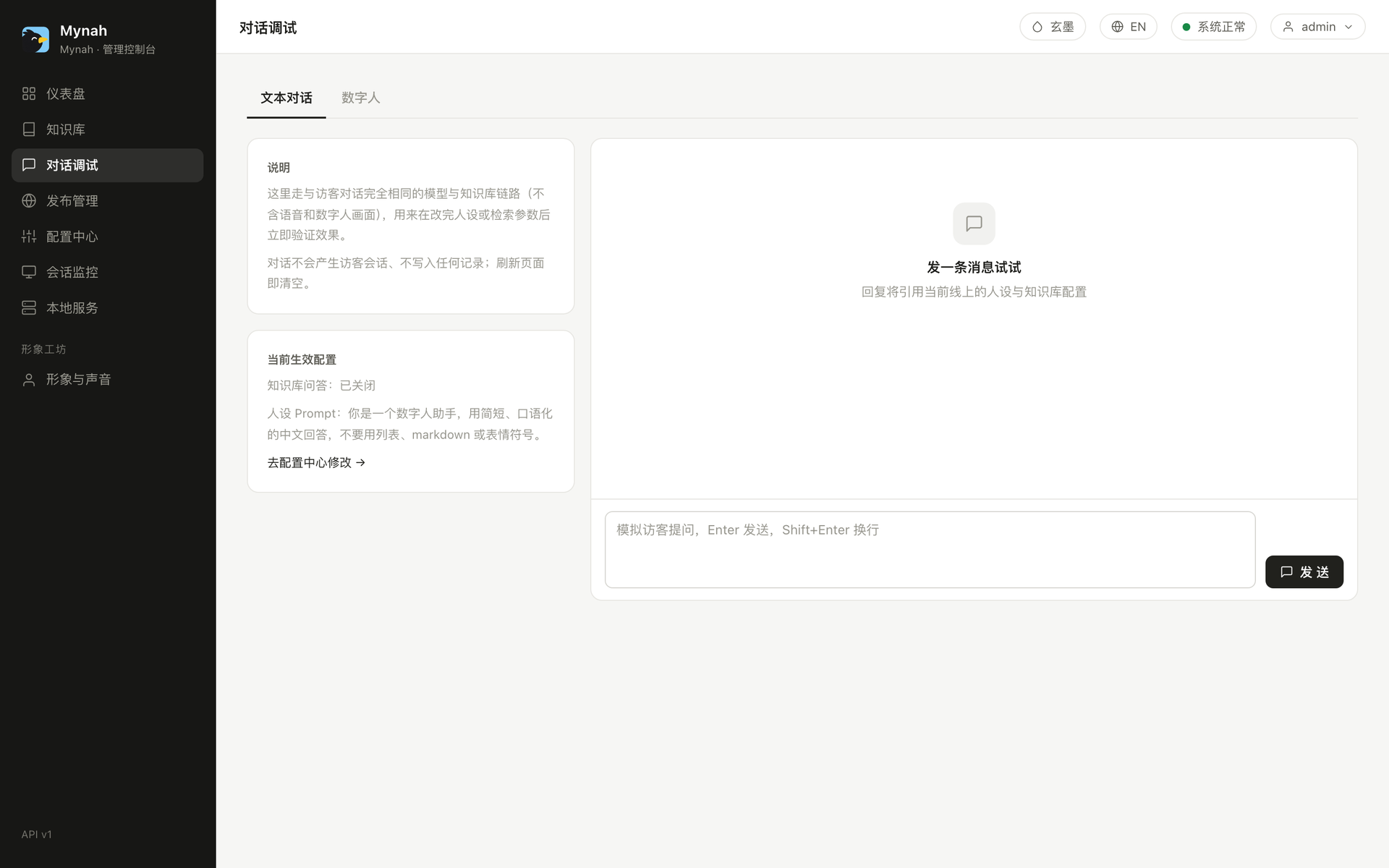
| 对话调试 Playground | Talk to the exact pipeline visitors get: text or voice, see retrieved chunks and latency, drive the avatar with text, trigger gestures, tune green-screen keying live. | /api/v1/playground/* |
| 会话监控 Sessions | Who is connected, since when, how many turns, whether the avatar is speaking; kick a session. | /api/v1/sessions* |
Three ideas that explain the console
Config is layered. Built-in defaults, then startup flags, then the database. Whatever you save in the console wins and survives restarts. The API returns the merged view.
Channels are snapshots. When you publish, the current model, voice, brain mode and knowledge settings are frozen into the channel. You can keep experimenting in the console without changing what visitors see; press "republish" to roll the new settings out. Branding fields (name, logo, background) are live metadata and change immediately.
Capacity is explicit. One avatar worker serves one session. The Services page computes how many workers fit in your VRAM from measured per-engine figures and refuses pool compositions that do not fit. Channel concurrency caps are allocated out of that pool, so you can promise a department "three simultaneous visitors" and have the system enforce it.
Themes and languages
Light and dark themes, Chinese and English UI, switchable from the top bar. The visitor page has its own theme per channel.